Announced in November of 2015, the Jeffrey H. Brodsky Oral History Award is given to one or more students annually whose thesis makes an important contribution to knowledge, and most exemplifies the rigor, creativity, and ethical integrity that OHMA teaches its students. The cash award is supported by a generous donation from the family of OHMA alumnus Jeffrey Brodsky.
In July 2023, Jeffrey H. Brodsky passed away at age 49 after battling Parkinson’s disease for a decade. Jeffrey Brodsky’s thesis and other oral history work exemplified the rigorous intellectual values and creative skills that OHMA teaches its students. The Jeffrey H. Brodsky Oral History Award will continue to pass on those values as it awards students for innovative and outstanding research.
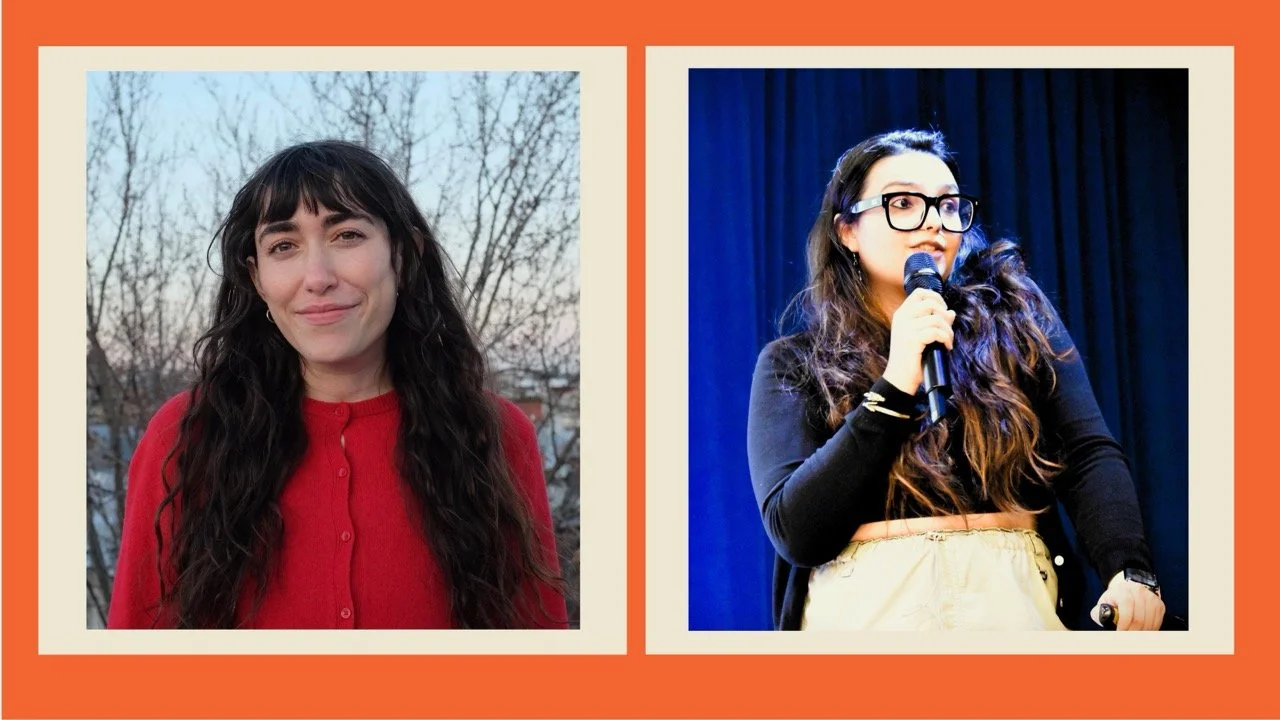
We are thrilled to share the news that this year’s Brodsky winner is Sage Foster-Lasser for her thesis, “Golden Hour: Psychoanalysis, Narrative, and Visual Culture in Family History,” advised by Sayre Quevedo.
We are also recognizing a second thesis project with an honorable mention: Avantika Seth’s “Will You Remember What I Choose to Forget,” advised by Nyssa Chow.
Oral history is an approach to knowledge production in which intersubjective relationships, grounded in care, ongoing consent, and reciprocity, allow for collaborative, dialogic storytelling and thinking. This is true whether the relationships are thick or thin, close or distant. It is true when we listen to our elders’ stories at the kitchen table, and it is true when we interview a professional in their office.
But close attention to family oral history, where our relationships are often thickest and most entangled, where care may flow most naturally or may be especially fraught, can lead us to new insights into these core aspects of our work. Sage Foster-Lasser and Avantika Seth pay this close attention, taking family history seriously as a generative space for methodological and theoretical innovation in oral history.
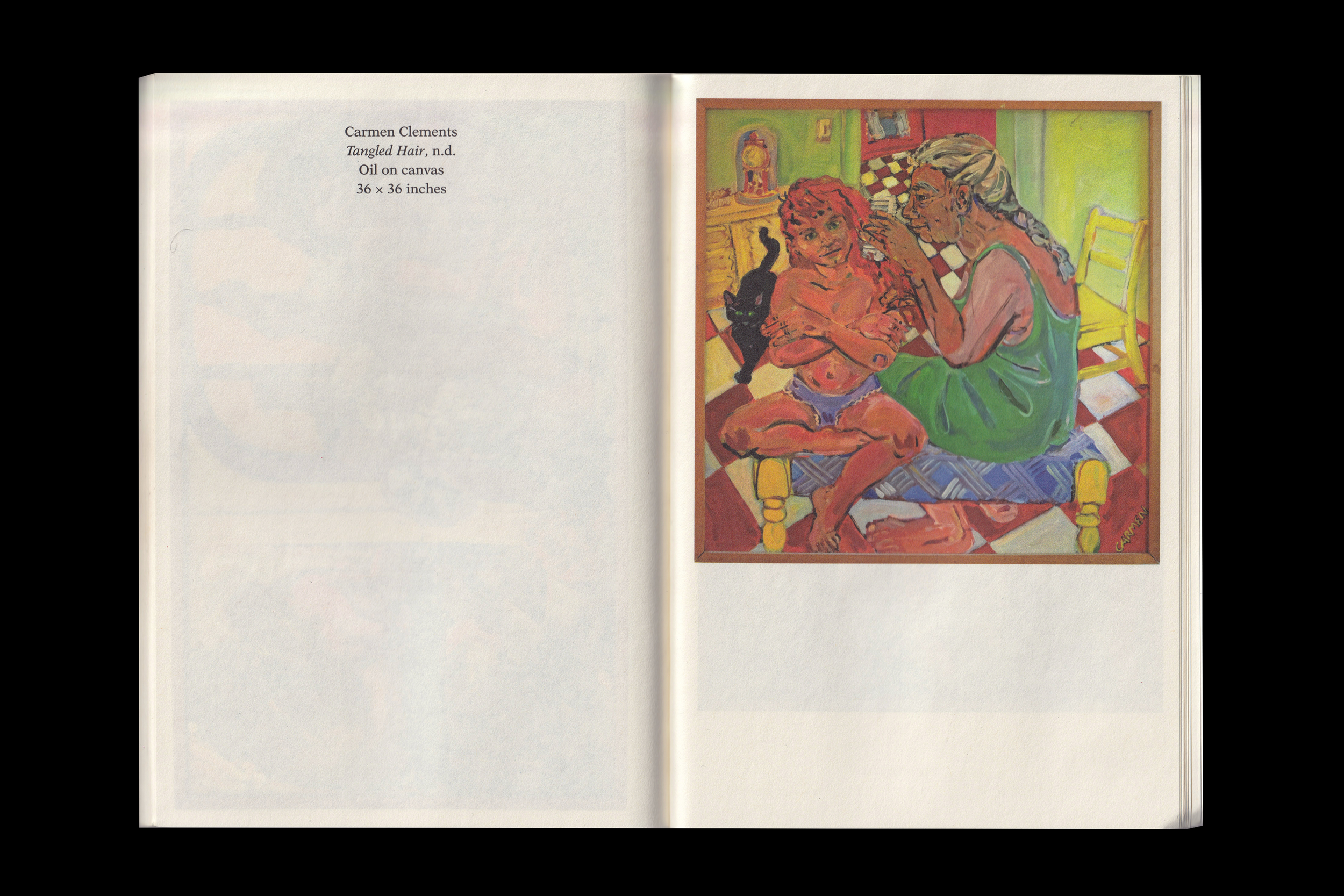
Sage Foster-Lasser’s thesis takes the form of a book, in which her own writing and a recorded conversation with her mother flow in parallel across the pages, punctuated by family snapshots and paintings by her grandmother.
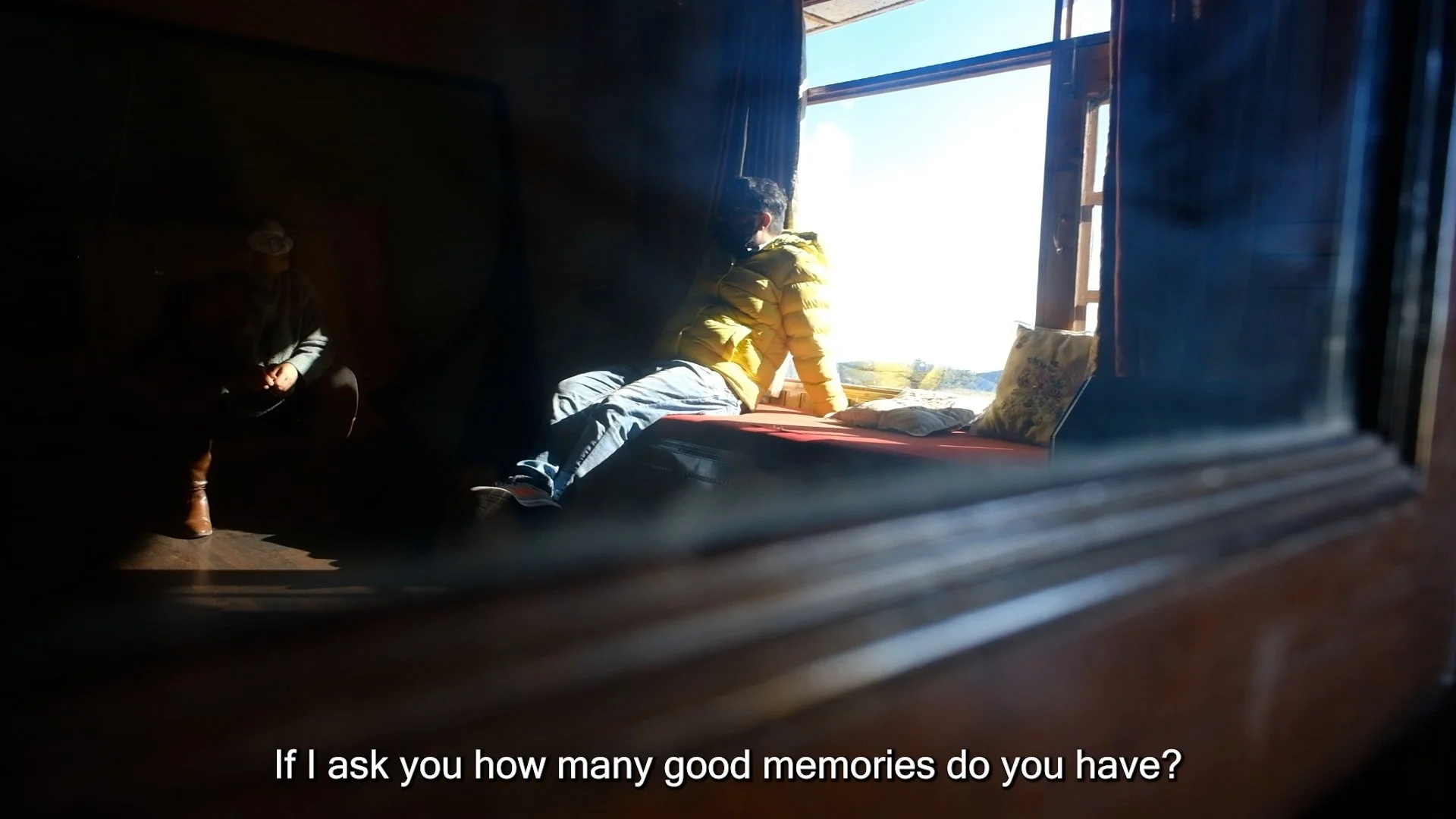
Avantika Seth’s thesis takes the form of a feature-length film and accompanying essay. The film features her father, mother, and brother as central narrators, alongside her two family homes in Shimla, India - the old one where three generations grew up, and a new one they moved to recently - as settings, memory prompts, and archives.
Sage Foster-Lasser’s subtle and beautiful book begins with curiosity about pregnancy and birth, where some of our earliest experiences of listening and attunement take place. In conversation, she learns from her mother (a former birthworker) about the experience of listening in the womb, and about what it is like to talk to a fetus living inside your body who you cannot see. Using ideas from psychoanalysis and child development, Foster-Lasser explores the dynamic tensions between language and experience, looking and listening, and thinking and play in the oral history encounter and in family relationships. For example, relational psychoanalyst Wilfred Bion theorizes about both the psychoanalytic encounter and the parent-infant relationship as spaces where one’s raw experiences - “beta elements” - are processed into language and meaning - “alpha elements.” Foster-Lasser extends this into the oral history encounter, drawing analogies and also contrasts between the work of parenting, oral history, and psychoanalysis. In parallel, she draws on thinking about artistic practice - Christina Sharpe’s idea that “beauty is a method,” Roland Barthes describing the “flat death” of photography - to make sense of the gaps we often find ourselves struggling to bridge in oral history practice: between what we know and what we can say, between the desire to document and the impossibility of capturing experience in art.
To understand the dangers and rewards of exploring our most intimate relationships through oral histories, Avantika Seth draws on the work of Judith Butler, their insights that the attempt to give an account of oneself is relational and carries with it always the risk of undoing, for both listener and teller. Oral histories can be a space to do the work of making sense of a life, and can be a container for the messy, the open-ended, the contradictory parts that do not fit into any neat story. In her film, Avantika Seth carries this balance of spaciousness and structure through into curation, inviting us to sit with her family as they confront, but do not resolve, the harm and the care that connect them. She writes:
Rather than offering answers, the film holds space for contradiction, allowing multiple temporalities and interpretations to remain active at once. Its meaning lies not in what is conclusively revealed, but in what is allowed to remain unsettled, carried forward, and lived with. Ultimately, the film became an archive of relational endurance: not a recovery of the past, but a record of how a family lives with what cannot be resolved, only carried.
Both Seth and Foster-Lasser produce methodological and theoretical tools for working in the ambiguous spaces where multiple versions of a history come together, sometimes colliding. This work has relevance beyond the family: Foster-Lasser argues that family oral histories can be fertile spaces to “build intragroup comfort with and meaning-making opportunities around conflicting experiences of shared history when narratives do not align” (16).
Family oral histories can generatively unsettle disciplinary norms and best practices. Avantika Seth finds that the family oral historian cannot simply import the bureaucratic norms of institutionalized oral history practices - consent forms and pre-interview checklists and clear boundaries - into the home. In doing oral history with family members, the boundaries between life and research often become more porous, and ongoing consent is woven into the texture of daily life. She talks to her parents about the project while they are sitting up on their bed, her father playing Sudoku and her mother sewing a button.
Both Avantika Seth and Sage Foster-Lasser expand the understanding of “the third” in oral history. The archive or future public audiences typically serve in this role, creating space and possibility in the dynamic between an oral historian and narrator. Foster-Lasser used her grandmother’s paintings - lively and ambiguous family portraits without specific named subjects - in this way. Participants in the project could talk about the people in the paintings, who they thought they were and the kind of family life they seemed to be representing, as a way of coming at their specific family histories from a new angles. Avantika Seth worked with a cinematographer as she was doing oral history with her family, and his presence (with his camera) allowed family members to speak to him (or to it), when speaking to their daughter was too much. She describes him as “a stabilizing force” as the oral history process destabilized family relationships.
Family histories may seem like small things, private things. Indeed, both of these authors choose to keep many of the specific details of their families’ histories private. At the same time, they offer us insights with relevance not only for the broader practice of oral history, but for the challenges of living in these times. Foster-Lasser writes:
Close study of the oral history encounter invites us to spend time inside of an environment intentionally dedicated to listening, examine its parts, and consider how we might extend some portion of the intersubjective rigor and meticulous care that space asks of us into other areas of our lives…. We are living through an immense absence of holding environments. It can feel silly to write about listening when the world is on fire, until we remember that the crisis of containment speaks to something larger than the dyadic encounter between parent and child, analyst and analysand, or oral historian and narrator. (16,85)
These two theses are among many exceptional works by this year’s OHMA graduates, many of which also explore themes of care and family, listening and visuality, closeness and distance. You can explore them here. We invite you to stay tuned for our 2026-27 public programming series - Keeping Memories: Oral History Practices that Host Kin and Community - which will engage these themes and include events with Sage and Avantika.
