[Alumni Profile] Writer, Educator and Oral Historian Svetlana Kitto

IMG_0110.JPG

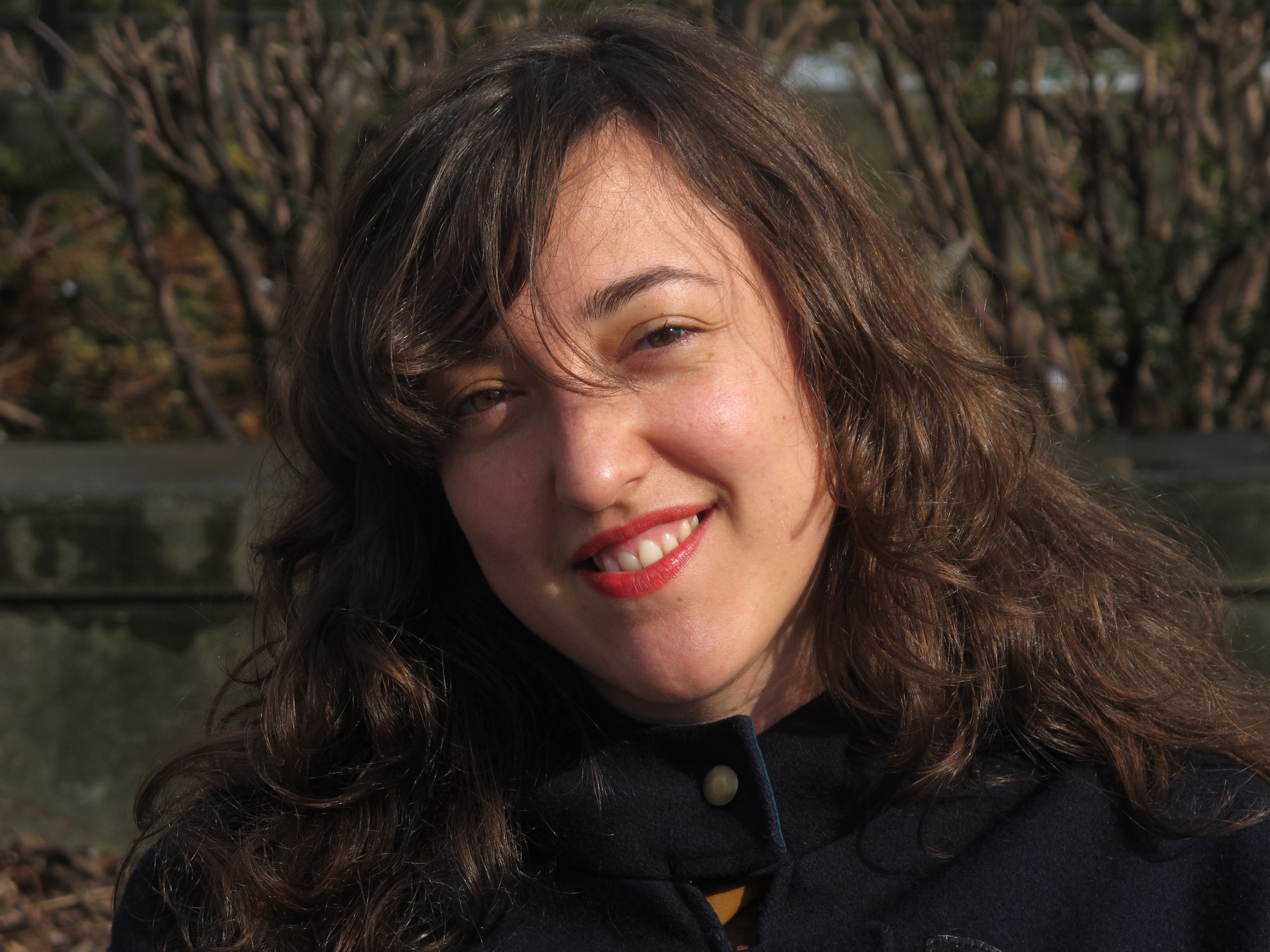
This March OHMA alum Svetlana Kitto will be teaching an exciting new literature and writing workshop at the Brooklyn Historical Society called Racial Realities: Writing About Race in the First Person, which will focus on fiction, memoir, oral history, and essay forms that reflect experiences of race and identity. This workshop is part of Brooklyn Historical Society's Crossing Borders, Bridging Generations (CBBG) oral history project and public programming series, which examines the history and experiences of mixed-heritage people and families, cultural hybridity, race, ethnicity, and identity. Several OHMA alums and current students have conducted interviews for this project, and we are excited about this new workshop, which continues to build on the many productive connections between OHMA and the oral history program at the Brooklyn Historical Society.

We’d like to use this opportunity to launch a new feature on our website: Alumni Profiles, in which we check in with OHMA alums and hear what they’ve been up to since graduation.

Svetlana came to OHMA with an interest in the relationship between oral history and literature, and writes fiction, memoir, and essays with an eye toward everyday history, memory, and place. Most recently, her writing has been featured in Mr. Beller's Neighborhood, and the book Occupy! Scenes from Occupied America, published by Verso Books, among other publications. Her time at OHMA culminated in an interview-based memoir about her grandparents and the Holocaust in Latvia, as well as an oral history project with artists, writers and activists called to action in the early years of the AIDS crisis. She presented that project at the 2010 Oral History Association “Times of Crisis, Times of Change: Human Stories on the Edge of Transformation” conference and the Northeastern Modern Languages Association conference in 2011. In October 2012, audio from those interviews were part of an exhibit for National Coming Out Day at the gallery Space on White in Tribeca; the project is currently making its way to the Lesbian Herstory Archives.

Since graduating, Svetlana has shared her skills by working as an oral history workshop leader. In spring 2011, the international law firm Clifford Chance sponsored her and an artist to develop an art and oral history program for a high school Gay-Straight Alliance. Through the course of a semester-long series of workshops, the students developed large-scale banners that addressed issues related to identity, visibility and acceptance, culminating in an exhibit at the law firm. She presented these banners at the 2011 OHA conference as well as the Oral History Mid-Atlantic Region conference later that year. She has also taught art and oral history workshops at the Lincoln School in Rhode Island, Elders Share the Arts in Brooklyn, the Asian American Writers Workshop and the Brooklyn Museum, and a creative writing workshop at a homeless youth drop-in center in Chinatown, NYC.

Svetlana has also been working as an interviewer and oral history project manager. Her background in art and design journalism led to a commission from the Museum of Arts and Design in New York City, where this spring she will be doing an oral history of the American Design Club for the museum’s “American Design Now: After the Museum” exhibition, slated to open in March, which will present a series of installations and programs that reveal the largely hidden research component of the design practice, while examining cultural institutions’ role in the shaping of design. She is also the project manager and head interviewer on an oral history project of the Jewish Theological Seminary of America, one of the major global centers for academic scholarship in Jewish studies that has produced some of the most influential Jewish thinkers of the past century. She’s also, of course, part of the interviewing team for the Brooklyn Historical Society’s Crossing Borders, Bridging Generations Project. As of this writing, there are still a few slots left open in her workshop this month – check it out here if you’re interested!

[Workshop Reflection] Alisa Del Tufo: Surfacing Solutions

In Alisa Del Tufo’s talk on Thursday, January 31st the oral historian and activist sought to inspire her large audience with the story of her life’s work. Watch a video of the talk here.

Alisa Talking.jpg

Del Tufo credits inflection points, or life changing moments, with the direction of her career and her inspiration to use oral history to surface new solutions to domestic violence. The first major such inflection point was in 1987. The case of Hedda Nussbaum and Joel Steinberg, in which a young girl, Lisa Steinberg, was killed at the hands of Joel Steinberg, stirred significant public controversy and prompted Del Tufo to explore the link between adult domestic violence and child maltreatment; which up until this point had been ignored and unexplored.

In 1991 Del Tufo left Sanctuary for Families, which she had founded in 1984, and began the oral history project that ultimately opened up New York City’s eyes to intimate violence.  To hear Alyssa explain the project, the ah-ha moment that led her to try oral history as a method and what she learned, listen to the following clip:

Alisa audience.jpg
Alisa questions.jpg

Conducting these interviews was a second inflection point for Del Tufo and what surfaced in these conversations with battered women inspired her to begin meeting with influential feminists, politicians, and community activists to begin to make a change. The primary result was a domestic violence handbook, “Behind Closed Doors: The City’s Response to Domestic Violence,” which brought the issue to the front and center of the city’s politics.

In oral history, we look at “a-ha moments” as moments when the narrator is able to create a new thought or response though the process of the oral history interview, “I didn’t know I felt that way” or “I’d never thought about it that way before.”  This is not entirely different from what Del Tufo deems an inflection point.  Both are self-imposed structural shifts in the narrative.  When using oral history as a tool of activism, it is the a-ha moment or inflection point that recognizes the problem and can lead to the corresponding action.

As aspiring oral historians themselves, the authors of this blog post experienced a few inflection points/a-ha moments during the discussion.  Sara was challenged and motivated by Del Tufo’s assertion that in order to make change, one must choose the right moment. As oral historians looking to make an impact on the world, what is our moment?  Is it possible to not only choose the moment, but to create the moment? Can one document the present to change the future? Ellen’s inflection point came when Del Tufo discussed altruism as a motivation for battered women to tell their stories. Many of the women Del Tufo interviewed agreed to these intimate conversations not for their own well-being, but because they believed their stories might help others in the same situation. Should we assume (or hope) that these altruistic motives can be found in other at-risk communities? Towards the end of the discussion several people discussed other issues to which Alisa’s methods might apply – such as elder abuse and sex trafficking. How can we tap into and encourage this community service model elsewhere?

For more information on oral history projects inspiring social change, check out the following sites:

Groundswell http://www.oralhistoryforsocialchange.org/

Tibet Oral History Project http://tibetoralhistory.org/index.html

Voices of Rwanda http://voicesofrwanda.org/

Khmer Legacies http://khmerlegacies.org/

It Gets Better http://www.youtube.com/itgetsbetterproject

Cleveland Homeless Oral History Project   http://www.youtube.com/watch?v=NHRkPuJfasg

Other organizations founded by Alisa Del Tufo:

Connect http://www.connectnyc.org

Threshold Collaborative http://www.thresholdcollaborative.org

(post by OHMA students Sara Wolcott and Ellen Brooks)

Spring Workshop Series Schedule Now Available!

From the Columbia Center for Oral History

We are delighted with the success and overwhelming response to our fall oral history workshop series, which featured presentations by Michael Frisch and the 198 String Band, Voice of Witness book editors Sibylla Brodzinsky and Max Schoening, oral historianSuzanne Snider, Oral History Master of Arts Program alum Andrea Dixon and many more. We are now gearing up for an exciting spring semester in our series that is funded through the Paul F. Lazarsfeld Lecture Series for programming that embodies the late Professor’s commitment to improving methodological approaches that address concerns of vital cultural and social significance. The series is co-sponsored by the Columbia Center for Oral History (CCOH) and the Oral History Master of Arts Program (OHMA). All of our workshops are free and open to the public and will explore the myriad of ethical and practical issues raised by the practice of oral history in the different disciplines within the humanities and social sciences.

Thank you for your continued interest and support, and we look forward to seeing you soon!

UPCOMING WORKSHOPS: SPRING 2013

January 31, 2013
Alisa del Tufo, Social Reformer
Surfacing Solutions: Using Oral History to Find New Solutions to Intimate Violence
Time: 6:00 – 8:00pm. Location: Columbia University, 509 Knox Hall, 606 W. 122nd Street[More Information]

February 14, 2013
Doug Boyd, Director of the Louis B. Nunn Oral History Center
Search, Explore, Connect: Enhancing Access to Oral History
Time: 6:00 – 8:00pm. Location: 523 Butler Library

February 21, 2013
Gabriele Stabile and Juliet Linderman, Voice of Witness Publication Series
Everybody is a Stranger When They First Arrive: Refugees’ Experiences in America
Time: 6:00 – 8:00pm. Location: Stabile Student Center, Journalism School

March 14, 2013
Lillian Jiménez, Filmmaker
Uncovering Hidden Histories: The Making of Antonia Pantoja: ¡Presente!
Time: 6:00 – 8:00pm. Location: TBD

April 11, 2013
Sarah Mountz
Both Our Voices: A Feminist Relational Approach to Life History Narratives of Previously Juvenile Justice Involved LGBTQ Young Adults
Time: 6:00 – 8:00pm. Location: TBD

April 25, 2013
Jennifer Scott, Vice Director/Director of Research, Weeksville Heritage Center
Movement Creates Museum: the Activist Beginnings of Weeksville Heritage Center
Time: 6:00 – 8:00pm. Location: TBD