Interested in joining OHMA? Join us for a virtual open house led by program director Amy Starecheski and alumni speaker Gloria Mogango.
This event is open to all prospective students of Columbia University’s Oral History Master of Arts. Co-hosted by program director Amy Starecheski and alumni speaker Gloria Mogango, this event will help you get to know about more about OHMA, the work we do, and how you could fit into our community.
OHMA is the first program of its kind: a one-year interdisciplinary Master of Arts degree training students in oral history method and theory. Our graduates work in museums, historical societies, advocacy organizations, media, the arts, education, human rights, and development. OHMA is also excellent preparation for doctoral work in fields like anthropology, history, journalism, and American studies or professional degrees in law, education, or social work.
Jointly run by Columbia Oral History (COH), one of the preeminent oral history centers in the world, and Incite, a lively hub for interdisciplinary research in the humanities and social sciences, OHMA connects students with the intellectual resources of a major research university and with the intimate society of a small cohort of talented students.
OHMA invites applications from students who have or will have received a baccalaureate granted by a college or a university of recognized standing by the time of enrollment. Students currently enrolled in the undergraduate schools of Columbia University are also encouraged to explore our B.A./M.A. option.
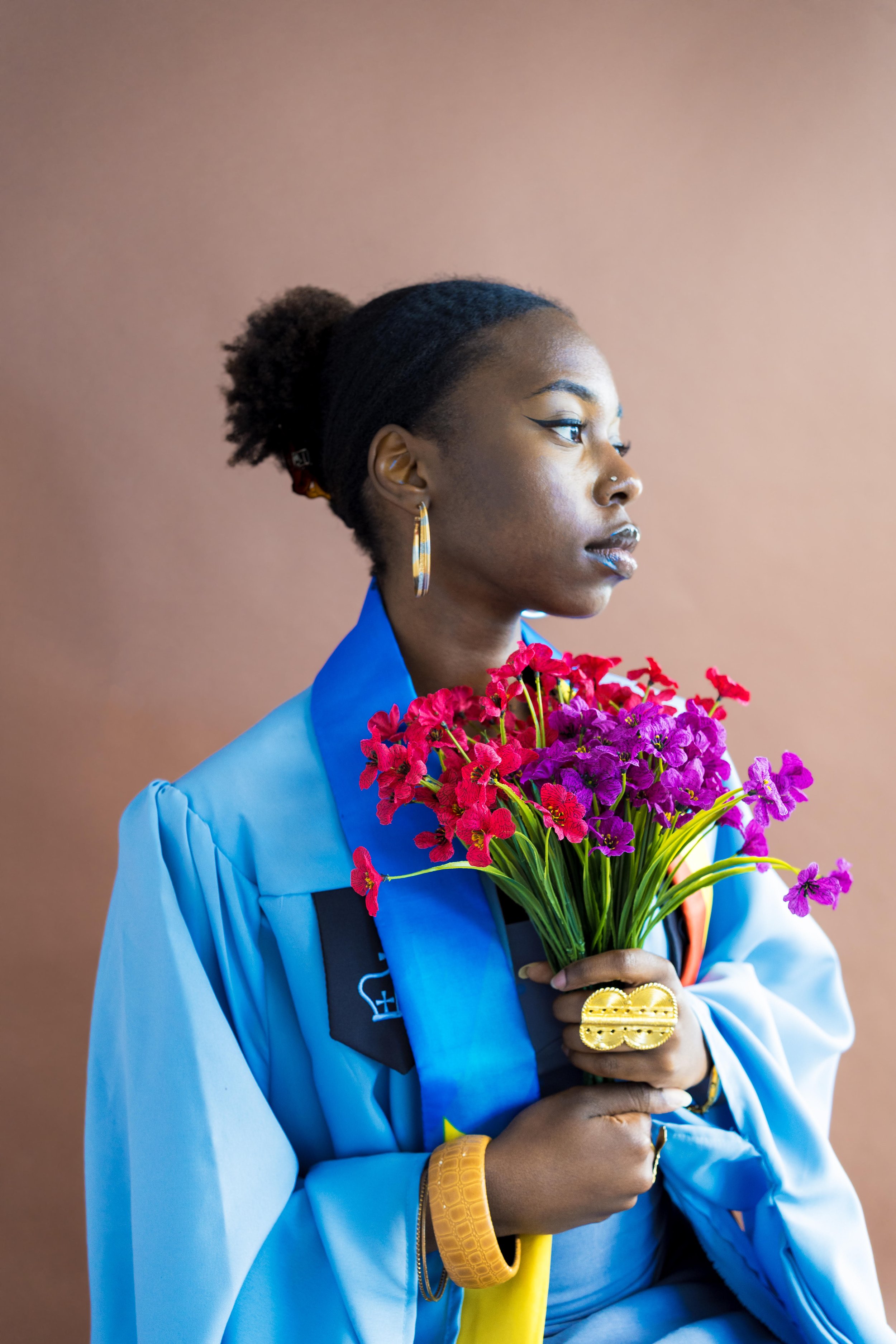
About Gloria Mogango
Gloria Mogango Alumbi Ma Ekonzo is a Congolese-born French scholar, oral historian, and cultural heritage researcher whose work explores memory, identity, belonging, and cultural transmission within African and Afrodescendant communities.
Raised in France by Congolese parents, Gloria has navigated multiple cultural and social worlds throughout her life. This experience has shaped her interest in the ways people inherit, negotiate, transform, and sometimes question the cultural identities they are expected to carry. Her interdisciplinary training spans Art History, Anthropology, Political Science, and Oral History, bringing together historical research, ethnography, oral testimony, and cultural heritage.
During her Master’s in Oral History at Columbia University, Gloria’s research led her to examine how the histories of slavery and colonialism continue to shape contemporary understandings of identity, culture, and belonging among younger generations of the African diaspora. Her work became an opportunity to reflect not only on inherited histories, but also on the complex ways individuals construct identities across cultures and generations. Through this process, she began exploring the concept of “third culture” as a framework for understanding diasporic identities that emerge between, across, and beyond inherited cultural worlds.
Her OHMA training in oral history gave her new ways of approaching these questions through life stories, memory, and personal testimony. It also opened a path from academic research toward public history and cultural heritage work, allowing her to consider storytelling not only as a research method, but as a way of preserving memory, making histories visible, and creating space for communities to articulate their own experiences.
Gloria currently works as a consultant for UNESCO’s Routes of Enslaved Peoples Programme, where she contributes to work related to Afrodescendant communities, storytelling, memory, and the legacies of enslavement and the transatlantic slave trade. The programme seeks to break the silence surrounding the history of slavery and the slave trade through research, memory transmission, intercultural dialogue, and initiatives connected to heritage and collective healing.
At the OHMA Open House, Gloria will reflect on the journey from her master’s research to her current work at UNESCO. She will discuss how studying the consequences and afterlives of slavery and colonialism led her to reconsider conventional understandings of identity and culture, and how the concept of “third culture” became a lens through which to understand the experiences of younger generations of the African diaspora. She will also explore how oral history and storytelling can help connect individual experiences to broader histories of displacement, enslavement, colonialism, migration, and cultural transformation, and how the skills and questions developed during her time at OHMA continue to inform her work today.
Quisque iaculis facilisis lacinia. Mauris euismod pellentesque tellus sit amet mollis.