Michael Giannetti is a Michigan native, growing up in Bloomfield Hills just north of Detroit. In 2020, he graduated from Lesley University in Cambridge, Massachusetts, where he studied US history, political science, and Africana studies.
Read MoreSusan Garrity (2020)
Susan Garrity has had successful careers in pharmaceutical marketing management roles and as an entrepreneur creating two businesses. She has lived on both coasts, in the Midwest, and for the last 30 years in Raleigh, NC.
Read MoreNina Zhou (2020)
Nina Zhou graduated from the University of Toronto with double majors in History and East Asian Studies in 2018.
Read MoreElizabeth Jefimova (2019)
Elizabeth Jefimova is a recent graduate of the Macaulay Honors Program at Brooklyn College. She double majored in Chemistry and History, with a double minor in Biochemistry and Biology.
Read MoreBrandon Perdomo (2020)
Brandon Perdomo is an interdisciplinary artist from New York, fascinated with self-reflection and alterity, which are the engines of his performances and images.
Read MoreTaylor Thompson (2020)
Taylor Thompson (she/hers) is a recent graduate of Barnard College of Columbia University (Class of 2020) where she majored in Economics and Social History and minored in Women's, Gender and Sexuality Studies.
Read MoreLiu Chen (2019)
Liú (pronounced “lee-oo”; pronouns: they/them) Méi-Zhì Wén-Yuàn Bransfield Chen is a queer, trans non-binary, disabled, mixed-race (Taiwanese/Irish), Abolitionist nerd. Some of their not-so-secret loves include math, musical theater counterpoint duets, women’s basketball, and bodies of water.
Read MoreFrancine D. Spang-Willis (2019)
Francine D. Spang-Willis is of Cheyenne, Pawnee, and settler descent. She is a descendant of Chief Dull Knife, also known as Morning Star, and Pawnee Woman. She is also a descendant of a pioneer family who settled in Montana during the late 1800s.
Read MoreLily Doron (2019)
Lily Doron grew up in Durham, North Carolina, and is a 2017 graduate of Duke University with a self-designed major entitled Rights and Representations: Ethics, Human Rights, and Documentary Narratives. Her goal is to enable narratives that society has traditionally ignored or silenced to be heard, using documentary media to promote social justice.
Read MoreAngel Labarthe del Solar (2018)
Angel Labarthe del Solar is a transgender activist born and raised in Peru. Angel is passionate about art and storytelling, with a considerable propensity to merge the two.
Read MoreLauren Instenes (2019)
Lauren Instenes is a queer activist and storyteller, with a flair for the dramatic.
Read MoreSun Oh (2008)
Sun Oh graduated from the OHMA program in 2010, where she focused her academic research on "narrative crisis" among people with mental illness who struggle with losing and re-taking agency and the "authorship" of their own life stories. After living and working in New York City, she now lives in London.
Anahí Naranjo (2019)
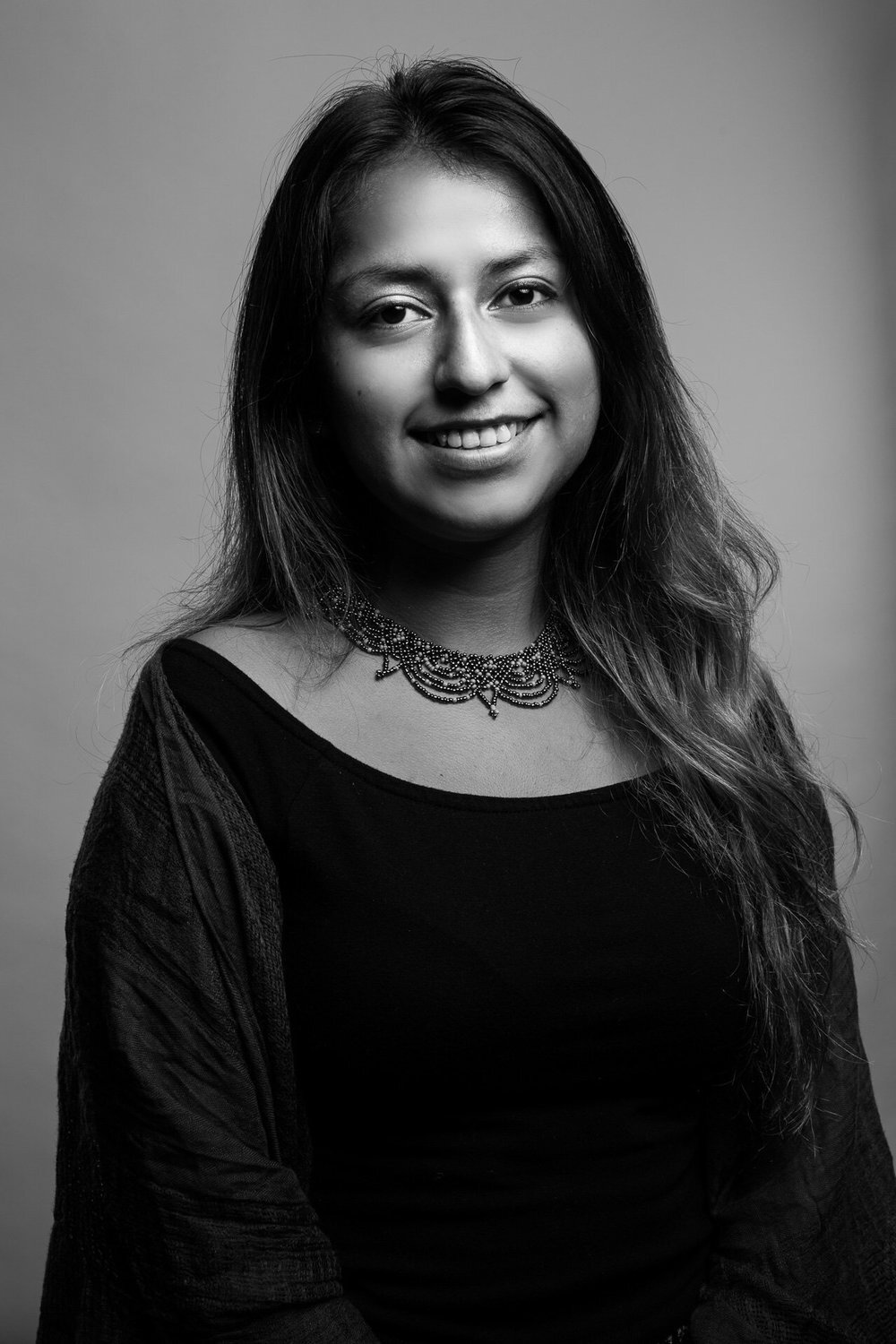
Anahí is an environmental justice advocate and storyteller from Quito, Ecuador. Uprooted from her agrarian livelihood in Ecuador to Bushwick, New York in 2002, she began to see the social and environmental inequalities her communities faced. She attended Middlebury College where she conducted life story ethnographic research that focused on the story of self and environment to gather individual and community histories to advocate for climate justice.
In 2016, Anahí conducted a photography and oral history project in Tanzania titled “Sagara Stories: Agrarian Narratives of Resilience of the Women of the West Usambara Mountains” to highlight the power that an agrarian narrative can have in revealing details of the resiliency of a culture in a changing climate and world. Anahí was a Doris Duke Conservation Scholar at the University of Washington from 2015-2016. There, she conducted another life story project where she photographed and interviewed tribal members of the Quinault Indian Nation on their life histories and their connections to the natural world to combat a proposed oil terminal that would endanger traditional treaty grounds. Anahí graduated in 2017 with a B.A. in Environmental Studies with a concentration in History.
Never forgetting her roots, Anahí's OHMA thesis explored the impacts of climate change on the cultural and physical landscape on her Andean hometown of Guaranda, Ecuador through her grandparents' stories. She continues her oral history journey through a platform she created called Inclusive Conservation (https://www.inclusiveconservation.org/) of how narratives can empower communities to become agents of change towards climate and social justice.
Today, Anahí is the NYC Program Coordinator for Latino Outdoors and the Equitable and Just National Climate Platform Coordinator at the Center for Earth, Energy, and Democracy (CEED).
Zack Daniel Schiavetta (2019)

A pop musician and lifelong history student, Zack Daniel Schiavetta is part of the 2019/2020 OHMA cohort. A 2019 Graduate from the State University of New York at Purchase College, he’s a musician who has been performing and releasing his own records since 2014, but has held history very close to his heart.
Zack views and studies history as a way to understand power and how it is obtained, destroyed, manipulated, and perceived. His senior thesis was “A Brief History of New York City Anarchism: 1901-2011”, documenting the story of a movement that sought to destroy government power, and attempt to claim the city as their own from the assassination of President McKinley in 1901, to the Occupy Wall Street protests in 2011. He was first introduced to this topic as a touring musician, organizing shows, and releasing records, within the D.I.Y music scene of New York City and the northeastern United States. He saw the “Circle A” symbol marked in the D.I.Y spaces he’d play and book, as well as fellow musicians and friends identifying themselves as anarchists. He was intrigued by the political philosophy that his friends held onto and wanted to research more about this history.
During his time at OHMA, he wishes to expand upon this further, by researching and conducting interviews of New York City’s anarchists. He hopes to finalize his findings and research by publishing it as a book.
Noor Alzamami (2019)

Noor Alzamami is a queer, gender neutral femme of color. They have spent their lives as an observer as well as an advocate, learning the importance of stories and the individual's truth.
Joining OHMA is a thrilling new adventure on the heels of working with queer, housing insecure or unhoused youth in King County Washington as a Youth Programs Coordinator. There they empowered youth to explore their truth and tell their stories as experts who are paid to dispel the myth of a monolithic queer experience.
Previous to this position Noor's past experience includes working with and for unhoused people in the Pacific Northwest, teaching as a sex educator, organizing and activism in the queer community as well as in reproductive justice. Personally Noor is passionate about travel, creative healing and radical softness.
Kordell Keyandre Hammond (2019)

While a graduate student at OHMA, Kordell Keyandre (KK) Hammond's research explored interactional socio-historical linguistics and contemporary North-American discourse analysis. His OHMA fieldwork and exhibit, A View Through Them: An Americana Issue (2020), spoke with educators of color who interrogated questions of media messages on attitudes of public health, public opinion, public memory and public school education.
His aural thesis draws from said fieldwork, and guides close-readers through an autobiographical narrative prelude: Reading, writing and listening to his own autobiographical prose as a psychoanalytic medium of self-study. KK's oral history is loosely based on humanistic psychologist Carl Rogers' client centered therapy.
You can connect with Kordell on LinkedIn @ linkedin.com/in/kordellkhammond. To learn more about his definition of doing narrative as medicine, Discourse on Doing: Oral History as Psychohistory (2023), experience his soundcloud here: https://soundcloud.com/kkhammond.
Eleonora Anedda (2019)

Eleonora Anedda was born in Muravera, Italy; she was raised in a small town in Sardinia and spent most of her life inhaling the clean Mediterranean breeze. In 2015 she began attending history classes at the University of Cagliari. Three years later, she was awarded a first-level degree in History with a dissertation on the trial of Baroque painter Artemisia Gentileschi. The following summer, she assisted Roberto Ludovico, Director for the Centre of Italian Studies in Amherst - University of Massachusetts, in Turin’s Archives, with a research project on the socio-economic value of a royal banquet of the Savoy family. For Eleonora, it was fascinating to participate in the process of scientific research. She moved to London in 2018 to pursue a Master in Queer History at Goldsmiths College. Working on sources from Boston’s archives she graduated with a dissertation on gay conversion therapy practices in the US. Eleonora’s background in Women’s Studies and Early Modern Age Europe has given her a solid foundation to explore Contemporary LGBTQ+ History. Capturing the voices of minorities and the less represented has always been at the heart of her research interests; which is why she is honoured to have been an OHMA student. This course was more than an academic experience, it gave her the opportunity to grow both as a historian and as a person.When she isn’t glued to her computer she enjoys taking care of her eleven orchids, eating tagliatelle, going for long walks with her dog, swimming, and buying more orchids.
Steve Fuchs (2016)
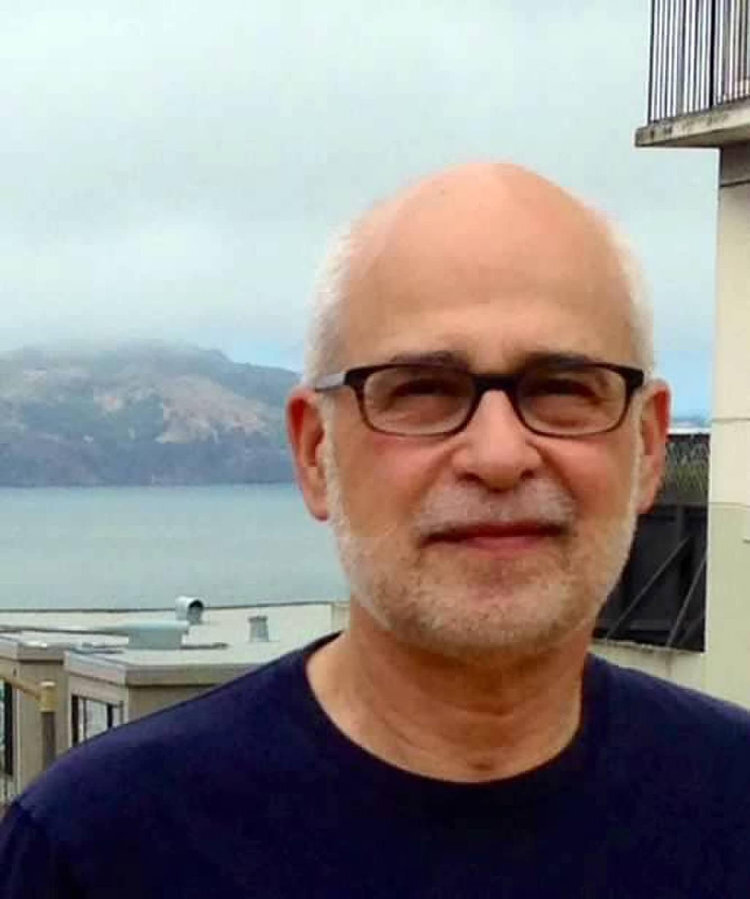
Steve Fuchs is currently C.E.O. of True North, Inc., a NYC-based digital advertising agency he co-founded twenty-two years ago. A New York native, he is looking forward to becoming a student (part-time) after thirty-seven years in the work force.
Steve’s parents and family emigrated from Cuba in the late 1950’s and early 1960’s, just as the political landscape was changing. He grew up hearing many stories about life before and after Castro took power—oral histories from family members who experienced historic changes in real time. Perhaps this is where his interest in oral history began.
Steve graduated from Syracuse University in 1979 and currently serves on the Board of Advisors to the S.I. Newhouse School of Communications. He is also a passionate New York Rangers hockey fan and tries to take in as many games as possible during the season. He is looking forward to becoming a part of the Columbia community.
Christina Barba (2017)
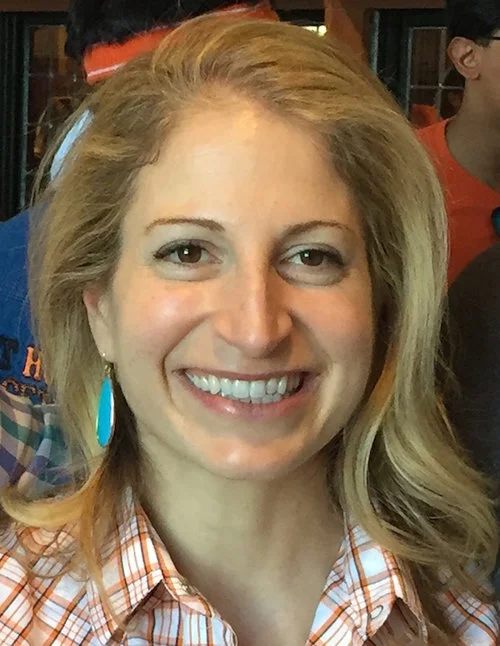
Christina Barba is an oral historian and attorney. She received her B.A. from Princeton University in 2002 and her J.D. from American University in 2006. She spent the majority of her legal career as an Assistant District Attorney prosecuting public corruption at the Bronx DA’s Office. Currently, she is a Hearing Officer for the Office of Administrative Trials and Hearings where she adjudicates administrative law matters as an impartial judge and issues written decisions post-hearing.
Christina received her M.A. from Columbia University in 2020 after completing the OHMA Program. She was recognized as the runner-up for the 2020 Jeffrey H. Brodsky Oral History Award based on her capstone project, which included a short video that makes tangible the theoretical concept of postmemory. Using testimony from an Armenian Genocide survivor and his daughter, her project explored the transmission of memory, inherited trauma and the convergence of personal and transgenerational memory. Christina is currently working on an oral history project with artists who are 2nd or 3rd generation Armenian Genocide survivors. She resides in Manhattan with her two children and husband.
Darold Cuba (2018)
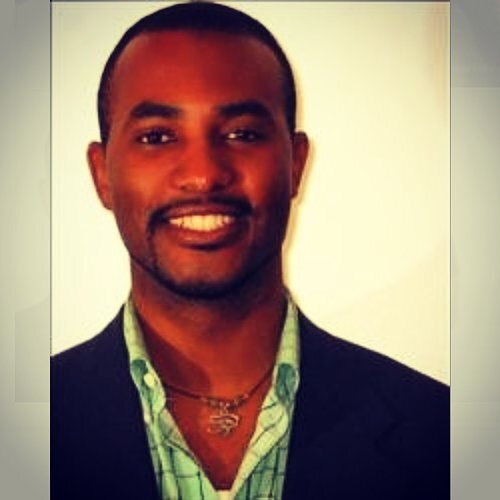
Darold is a social impact innovator and entrepreneur, a Center for Public Leadership Fellow at the Harvard Kennedy School, the Ivy League's first Wikipedia Fellow, and the inaugural Oral History Fellow at the Washington National Cathedral. With a background at the intersections of media, politics and business, his work has spanned disciplines of journalism, oral history, theater, film, tv, art, advertising/PR/marketing, communications and digital technology.
He founded #HackingRacism at the Columbia Business School’s Innovation and Entrepreneurship Incubator (IE@Columbia), ℅’17 to help people dismantle systemic white supremacy and institutional racism in their everyday lives. That in turn incubated #MappingFreedom, the public-facing, crowd-sourced, open knowledge, open access, open source, knowledge equity, digital & emerging technology initiative which interactively documents and digitally maps all of the "freedom colonies" on the planet. (Since the inception of Western colonialism, the targeted peoples escaped the terrorism of Racialized Inheritable Phenotypic One-Drop - Chattel Atlantic Slave Trade Economy (RIPOD-CASTE) - his terminology - slavery, indigenous mass genocides, Jim Crow, Black Codes, and other human rights abuses, creating their own “colonies of freedom” and successfully protecting these “safe spaces.”) Powered by Google’s GIS technology, this interactive map seeks to also digitally recreate these communities at varying stages and times in their histories. He then founded the International Association of Freedom Colonies (iAFC) and its Oral History Archives to advocate for this “international phenomenon of freedom colonies" around the world.
He co-founded #DisruptWikipedia with the Columbia University and Barnard College libraries (where he was the first Wikimedian-In-Residence) to “disrupt, dismantle and eliminate the settler colonial bias causing the digital and tech colonialism on the world's largest site for knowledge” and is incubating the WikiHBCU/DIO initiative to establish a “wiki presence” (Fellow, Resident and/or Scholar) at every “historically ‘black’ college, university, department, institution and organization on the planet” at the Washington National Cathedral, where he leads the Cathedral’s inaugural video oral history project “Thus Saith Our Souls: The African-American Experience in the Episcopal Church” (#AAinTEC) and serves on the Racial Justice Taskforce. Launching on Juneteenth, this inaugural oral history project from the nation’s cathedral explores the history of those branded “black” in the country’s oldest colonial religion, and its journey to reconcile its history in a forward facing process of reconciliation and reparations. Cuba also serves on the New York City’s Cathedral of St. John the Divine’s Reparations and Racial Reconciliation Committee, and Trinity Church Wall Street’s Achieving Racial Equity Commission.
An alumnus of The New York Times, Vice Media, TriBeCa Enterprises, and Fox Home Entertainment, his 2015 VICE Feature of the Year “The Loud Fight Against Silicon Valley’s Quiet Racism: How Tech Became A Civil Rights Battleground” explored the efforts of people and organizations working to eradicate racism and other such settler colonial bias/tech colonialism issues in the tech industry. He wrote the NYT’s "Not Forgotten" columns on Emmett Till & Medgar Evers, was a data journalist on the first Trump/Clinton debate, interviewed Wu-Tang’s RZA (Robert Diggs) live-scoring his favorite kung-fu film, and is the film producer of its 2017 College Scholarship Program.
His work actively dismantles the settler colonial narrative, perspective, lens and worldview of the “colonizer culture” - especially the effects of digital/tech/data colonialism - through a process of decolonization and indigenization. This process includes disrupting and eliminating the “white gaze” (Morrison), the “white imagination” (Rankine), and the “colonized mind” (Fanon) of the “racecraft” (Fields) that create these institutional and systemic outputs that fail the “DuVernay Test” (Dargis) in the first place. Darold speaks and presents around the world on a variety of issues connected to his work, and is currently a Mid-Career Master of Public Administration (MC/MPA) candidate at Harvard. He holds an MA in Oral History from Columbia, and a BA in Theater from Temple.