
Carrie Brave Heart joins the OHMA program from South Dakota. She
received her BS in History/Art History from Northern Arizona University
in 2010. She has a great love of Native American History and is excited in the possibilities resulting from the use of Oral History to add to the telling or use in the revision of traditional western historical narrative. In 2010, she began a project pertaining to artwork contained in the David Humphreys Miller Collection. This ongoing project’s purpose has been to locate living descendants of a group of Northern Plains Native American women, who Miller drew individual untitled portraits of, in the 1930’s. Her ultimate goal is to create biographies for each of these women to accompany their portraits, through the use of oral history interviews. Her current thesis work in the OHMA program is the Indian Village at the New York State Fair.
Joyce-Zoë Farley
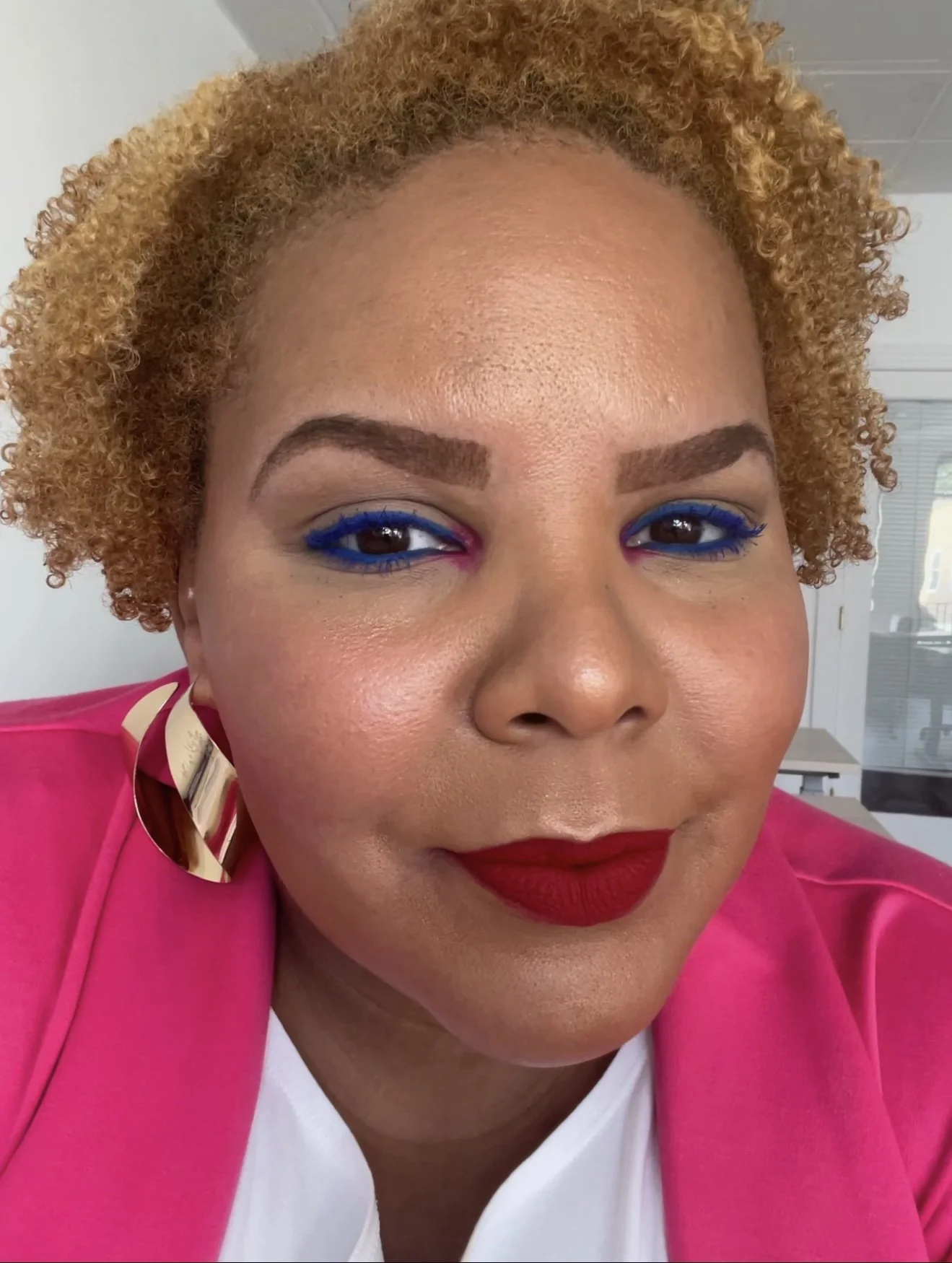
Joyce-Zoe Farley, Ph.D., is a communications strategist, educator, and media professional whose work spans academia, journalism, film, and public affairs. She has spent more than fifteen years working across television, print, digital media, and higher education—shaping narratives, advising leaders, and teaching at the intersection of history, culture, and public trust.
Her academic work and documentary film practice have focused on race, Black culture, memory, and storytelling, grounding her communications approach in deep historical and cultural analysis. Earlier in her career, she built and led communications, PR, and media strategies for news organizations and public-facing institutions, with a focus on credibility, audience engagement, and mission-driven impact.
She is now intentionally pivoting back into senior-level PR, media, and communications leadership—bringing a rare blend of scholarly rigor, storytelling fluency, and real-world media experience to organizations navigating complex narratives, reputational risk, and moments of change.
Sheila Gilliam (2013)

Shelia Gilliam received her B.S. Ed. from Jackson State University and her M.Ed. from Lesley University in Curriculum and Instruction. She joins OHMA after completing a two year teaching stint in the United Arab Emirates. Prior to her international experience, she has worked as a public school educator for seventeen years. Throughout her career, she has participated with the Gilder Lehrman Institute, the Fannie Lou Hamer National Institute and Civic Voices International Memory Bank Project in which she facilitated a student led oral history project linking the Atlanta Student Movement with historic nonfiction.
Jacob Horton (2013)

Jacob Horton worked with the Nantucket Historical Association (NHA) for two years following graduation from the OHMA program. During that time, he developed content for a museum exhibition elucidating the experiences of Nantucket’s first-generation immigrant population, established a volunteer interviewing program, and organized the NHA’s standing oral history archive which holds oral records dating back to 1934.
He developed a series of social media products focused on sharing and highlighting oral history materials including a regular blog, mixed media content, and a 6-episode podcast titled “All Ears Nantucket.”
He is currently working for a biopharmaceutical corporation in Singapore as part of a multi-discipline design team, helping develop their ethnographic practices.
Janée A. Moses (2013)

Janée A. Moses is an oral historian and Ph.D. candidate in the department of American Culture at the University of Michigan, Ann Arbor. Currently, she is working on her dissertation about the life and times of modern-day blues women, Amina Baraka, Nina Simone and Elaine Brown. In addition, Janée is conducting oral history interviews with women who participated in radical organizations and ascribed to 20th century iterations of black radical traditions. “‘And that's the way it was planned’: Toward a History of Post-War Black Girlhood” is an oral history project that endeavours to bridge emerging discourses of Black Girlhood studies and Black Power studies and argues that black girls born during and after World War II were impacted by social, political, and economic predicaments that necessitated the emergence of the black revolutionary woman ideal during the era of Black Power. Janée’s research interests include Gender, Women, and Sexuality studies, African American literature and culture, and social movement history.
Quisque iaculis facilisis lacinia. Mauris euismod pellentesque tellus sit amet mollis.